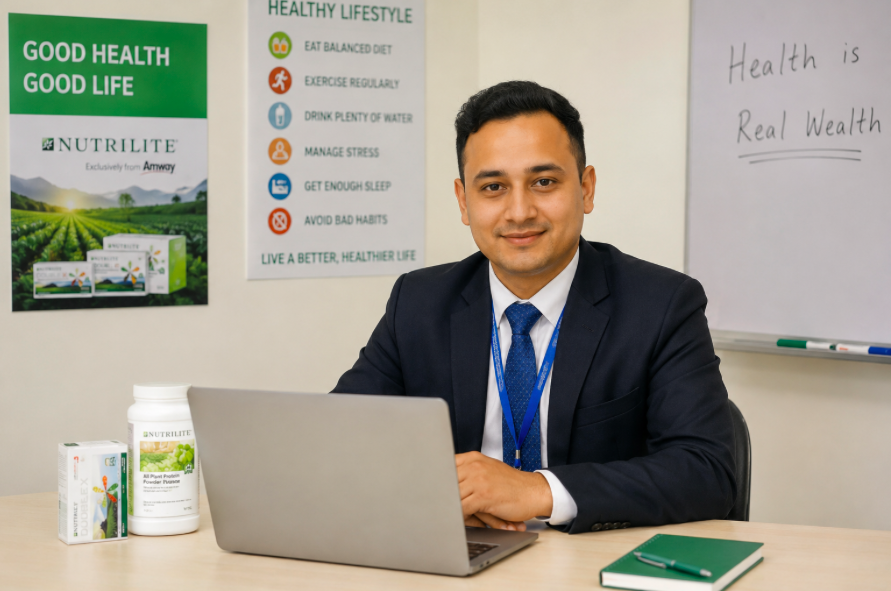
Human agency matters if any of us want to live a meaningful life.
It is our capacity to act independently, make our own choices, and intentionally influence our own lives and the lives around us.
I’m in my middle age now.
At this age, I can’t just passively react to circumstances and hidden forces, it is my active choice to set goals, anticipate outcomes, and shape my environment around me.
I believe most of you also think in the same way.
Martin Seligman, a psychologist and the author of ‘Agency’ says that human agency is built from three interlocking capacities.
Number one is efficacy, the confidence that we can accomplish a specific goal at any time in life.
Number two is optimism, the expectation that our efforts will pay off far into the future, not only for us but also for others including our offsprings.
Number three is imagination, the depth of our goals we can envision again and again when needed.
When all three components align to each other, our lives move forward and civilizations also move forward.
When three collapse, our lives stagnate, societies stagnate; no matter how rich our societies’ resources or how brilliant we are.
“When human efficacy, optimism, and imagination collapse, our lives stagnate, our societies stagnate.”
The social signals that we create and consume as an agent are engineered to trigger our neurophysiology.
Our brains have evolved to process them effectively.
These social signals change our behaviours and thinking processes.
I’m a scientist in a pharmaceutical company, I work to make medicines to cure diseases, so one of my passions as an agent is to spread awareness and knowledge regarding human health and longevity.
I would like to present one simple example as a social signal, how it works in our society.
My neighbor runs every day to become healthy and fit, when I see it, my mind also wants to run like him.
My best friend has already registered for an upcoming cancer awareness seminar, so my mind tells me I also should register now to participate.
These are some social signals for our mind to accelerate the urge to change our thinking and behaviours so we have the capacity to influence people in a positive way.
As a result, I’m using social media and my own website as tools in my agency.
The emotions, learnings, and experiences that we express in social media are magnified and spread to others, through feeds that change the way we all think and behave.
So the key is to use social media as a proactive agent, not as a destructive force.
Now imagine that I am an agent trying to change the unhealthy behavior of others.
The fuel for me is how much time I am spending to learn the material, and my engine is social media and my own website.
The increase in wheel rotation of human agency, like the car’s speed, is driven by the torque produced by the agent pressing on the gas pedal.
The torque for me is the intersection of my efficacy, optimism, and imagination as described by Martin Seligman.
In business, there is a term called ROI which is return on investment.
ROI = B – I/I
I is investment which is cost, B is benefit which is measured as profit or revenue or lifetime value or awareness or engagement which are indicators to move forward our progress.
Human agency needs time spent on learning what we desire, which is actually our cost and the satisfaction that it brings is our ROI.
Human agency also takes place over multiple ways.
Social awareness, curiosity, hobbies, and networking are some of the possible ways to participate.
The reason I’m writing this article is my agency for awareness.
To be honest, I’m doing it to spread awareness through my curiosity, experience, expertise, and networking.
The key to integrated human agency is the overlapping of these agency activities within and across multiple ways.
Human agency is the mimicking of our relationship to something that we adore and continuously want to carry with us for a long time.
In any of our close relationships, each of us builds an image of the other, and these two images have relationships, not the human being themselves.
This generally happens when we interact with a mental representation, an expectation of our partner rather than the person themselves.
My mental image is my healthy body and healthy mind, living happily, doing work that I love to do.
I also want to see the same for others.
It is often built on some past issues or problems which I had as a small health problem that I acquired due to my stupidity in my lifestyle.
In this scenario, I started to love the idea of writing, curious of what it can do for me, or the comfort it provides to me, resulting in a huge benefit for society.
“Humans love the idea of doing something, curious of what it can do for them, or the comfort it provides, resulting in a huge benefit for society.”
In a very enticing book that I recommend reading ‘How to Know a Person’, author David Brooks focuses on the skills required to transition from seeing people as “images” to deeply understanding them.
In ‘How to Know a Person’, Brooks illustrates psychology, neuroscience, theater, philosophy, history, and education to present a welcoming and hopeful approach to human connection that could also be a remedy for a society riven by fragmentation, hostility, and misperception.
I can relate this book with my agency because I am doing something in life thinking about the image of myself and others.
Brooks says “we must be prepared to become more understanding and considerate toward others, and find the joy that comes from being seen.”
One of my joys in life is a healthy lifestyle and its impact on my family, relatives as well as in society.
I see many people falling ill due to small bad habits that they are unaware of.
How can I influence these people to become healthy?
One very common cause of illness in our society is the food that we eat everyday.
Lets see the picture of food that we eat everyday.
There are very few quality ingredients in food that we purchase from the market, if we are aware of them.
There are low cost fillers like cornstarch, wheat flour, and sugar all over the place.
There are preservatives to extend their shelf life.
There are emulsifying agents to keep the food looking attractive for us.
There are many difficult to pronounce ingredients to amplify our appetite.
There are good wrappings around the food in an eye-catching package form with sport or movie celebrity endorsement.
There is an insane business going on inside the food packages.
After reviewing my past lifestyle and food habits, I have developed a small simple habit of eating a regular breakfast which is mostly oatmeal.
I always add a teaspoon of sesame seeds and fruits, especially some berries.
Recent research indicated that within one month, less than a teaspoon of sesame seeds a day drove down systolic blood pressure by eight points in middle aged men and women.
If sustained, that alone would decrease the risk of stroke by more than 25 percent.
Sesame seeds contain sesame, sesamin, sesamolin, and anthrasesamones A, B,C,D, E or F.
Sesame seeds are rich in magnesium, polyunsaturated fats, and specific antioxidant lignans.
One of the important lignans is sesamin that supports healthy blood vessel function.
Research also indicates that sesame lignans and vitamin E help prevent plaque buildup and reduce oxidative stress.
This week only we heard the news of the sudden death of a long serving senator in US senate, Lindsey Graham, due to sudden aortic dissection which is mainly caused by plaque buildup on the blood vessels.
“Research indicates that sesame lignans and vitamin E in sesame seeds help prevent plaque buildup and reduce oxidative stress.”
One of my favorite berries is cranberry that I add regularly in my breakfast oatmeal.
Dr. Michael Greger, MD, founder of NutritionFacts.org and author of ‘How Not to Age’ says “Cranberry polyphenols work against colon cancer cells because cranberry compounds suppress proinflammatory cytokines to mitigate inflammation driven colon carcinogenesis, which is particularly relevant for those with chronic colitis or inflammatory bowel disease, IBD.”
Cranberries function as a nondigestible, fermentable fiber that promotes the growth of beneficial gut bacteria like Bifidobacterium.
This process increases short-chain fatty acids, SCFAs, like butyrate, which strengthen the intestinal barrier and create a hostile environment for cancer cells.
Some of my family members as well as friends are overweight and I always hear about BMI, exercise, and avoiding fatty foods from them.
So I want to clear this misconception that the food that we eat has a major role for our body weight and composition than anything else.
The first misconception is regarding fat and BMI relationship.
First of all, our BMI doesn’t tell us where the fat is in our body.
It doesn’t tell whether it is benign fat or metabolically dangerous fat.
BMI doesn’t dictate anything, just be clear about it.
It cannot distinguish between fat, muscle, and any bone mass, and it fails to account for how fat is distributed across our body.
BMI only measures excess weight, not excess body fat.
Recently, one of the physicians misclassified one of my athlete friends as overweight looking at the BMI number because the physician didn’t realize that muscle is denser than fat.
Likewise, waist circumference doesn’t tell where the fat is, it tells fat is in the abdominal region, nothing more.
One clear truth is that conventional methods of weight loss preferentially target more benign subcutaneous fat, not abdominal visceral fat which is the main problem for our illness and faster aging.
Visceral fat, which is stored around internal organs in the abdomen, carries severe metabolic risks, whereas gluteofemoral fat found in thighs and hips is often benign.
BMI, therefore, fails to focus on correcting the source of insulin resistance and inflammation that drive weight gain.
There is another misconception regarding the relationship between cardiovascular disease and high cholesterol.
Statin drugs are to reduce cholesterol and reduce the risk for cardiovascular disease.
Most of the health professionals say we can reduce cardiovascular disease by 36 to 55% by statin drugs, but research shows, it doesn’t happen.
A standard full cholesterol panel is the traditional medical approach to assessing heart disease risk.
It breaks down the numbers to give us a general picture of our cardiovascular health.
Nowadays, specialized mini tests look deeper into the size and density of our LDL particles because they can be large or fluffy as well as small or dense rather than just the volume.
Small LDL particles are considered more dangerous because they can penetrate artery walls more easily, though their exact need in routine testing is still not normal.
Research shows that small LDL particles persist for five to seven days, much longer than the 24 hours of benign large LDL particles.
These small LDL particles can readily enter the walls of arteries, trigger inflammation, prone to oxidation and thereby lead to atherosclerosis.
“Small LDL particles persist for five to seven days, much longer than the 24 hours of benign large LDL particles, which can readily enter the walls of arteries, trigger inflammation, prone to oxidation and lead to atherosclerosis.”
One of my family friends recently told me that he lost weight with GLP-1 agonists but after a certain time he regained his weight back.
He lost 50 pounds by injecting the new GLP-1 agonist drug, but he immediately regained more pounds than he lost when he stopped the GLP-1 agonist.
He lost muscle in the beginning, he also lost some bone, and he regained all abdominal visceral fat back.
Now he has more fat than he started with inviting risk for heart disease, diabetes, dementia, and cancers.
Dr. William Davis, MD, author of ‘Super Body’ says “you cannot increase muscle by cutting calories, you cannot increase muscle with a GLP-1 agonist, and you cannot increase muscle by undergoing a bariatric procedure.”
So, the main question is how to lose only fat and regain lost muscle back.
To regain lost muscle, we have to boost oxytocin in our body, the hormone, whose release from the brain is under the control of gut microbes, especially Lactobacillus reuteri.
This is called gut-muscle relationship.
Remember, Lactobacillus reuteri comes to us by our mother during birth as well as breastfeeding.
But taking antibiotics by our mother or by ourselves might have wiped out this wonderful microbe long back in our life.
German microbiologist Dr. Gerhard Reuter discovered this wonderful microbe in 1962, isolated from the breast milk of a breastfeeding mother.
Many people are familiar with oxytocin as a love hormone but oxytocin is not only the hormone of love and empathy, but also the hormone of body composition.
It helps to restore youthful muscle mass and strength by shrinking abdominal visceral fat.
Lactobacillus reuteri in our human GI tract triggers our brain to release oxytocin well.
Oxytocin is a key to maintaining our body shape and composition.
It determines the contours of our body and location of fat and muscle.
“Oxytocin is a key to maintaining our body shape and composition, determining the contours of our body and location of fat and muscle.”
There are other friends of Lactobacillus reuteri, that is, Lactobacillus gasseri, and Bacillus coagulans, which are a powerhouse of bacteriocin production.
Bacteriocin is essential to kill bad microbes in the small intestine moving from the large intestine.
Over 100 million Americans are affected by SIBO, small intestine bacterial overgrowth, and its accompanying endotoxemia, harboring fecal microbes in their small intestines that allow endotoxemia to add to their health and crumble body composition.
Research shows that people with irritable bowel syndrome, IBS, obtain partial or complete relief with supplementation of these microbes.
They are key for the gut-muscle axis, a bidirectional cross talk between microbiome and muscle of the body.
Dr. William Davis, MD, a preventive cardiologist and author of ‘Super Gut’, has delivered a presentation at Talks at Google, where he discusses gut health and reprogramming the microbiome extensively.
I recommend watching Dr William Davis’s Talks at Google.
The interesting thing is that SIBO can be tested at home with a device called AIRE where we can measure hydrogen gas in the comfort of our home.
If we detect hydrogen gas on the breath thirty to forty minutes after consuming inulin, a fiber as a powder to test, then we have fecal microbes infecting our small intestine.
Any positive hydrogen measurement within 90 minutes, after inulin consumption, is therefore, indicator of SIBO.
After 90 minutes, we can not differentiate
hydrogen production, whether it is from the ileum of the small intestine or from the colon of the large intestine.
So what kind of lifestyle is required to prevent weight problems?
There are three food ingredients that we have to eat regularly, which are very important for our body muscle maintenance especially when we age.
The first one is collagen.
We must eat enough collagen that builds lean muscle mass and reduces insulin resistance and inflammation.
Most of us eat meat without organs, largely processed, which is the main problem.
All unprocessed meats, especially organ meats like tongue, heart, skin in our diet are essential to get enough collagen.
“We must eat enough collagen containing unprocessed meats, especially organ meats that build lean muscle mass and reduce insulin resistance and inflammation.”
Remember, collagen is very susceptible to glycation which means it is a protein but easily modified into glucose by the chemical reaction if we have excess glucose in our body.
Ideal fasting blood glucose is 60-90 mg/dl in a healthy person, while ideal HbA1c is maximum 5 percent.
When collagen is glycated, it becomes irreversibly brittle and accelerates dryness, excessive wrinkles, arthritis, high blood pressure, heart disease, and obviously, faster aging.
As a supplement, a dose of 10 grams per day of collagen is ideal.
The second food component is hyaluronic acid which disappeared from our modern diet that restores shape and body composition through microbiome.
Again, the best source of hyaluronic acid is organ meats like tongue, heart, brain, skin, joints, eyes, liver, and intestine.
Don’t throw them, eat them to get enough hyaluronic acid.
Hyaluronic acid is a polymer of sugars and we don’t have enzymes to degrade it.
The beauty is, microbes on the GI tract, digest it and they produce fatty acid butyrate. This butyrate is absorbed into our bloodstream and exerts the benefits like reduction in insulin resistance, abdominal visceral fat, blood sugar, and inflammation.
If you don’t like organ meat, take hyaluronic acid as a supplement powder.
A dose of 120 mg per day is a good dose for hyaluronic acid.
It can be taken by mixing into yogurts, kefirs, or any other food.
The third food component is carotenoids.
We have to eat a lot of whole foods including vegetables and fruits for enough carotenoids like beta carotene, lutein, zeaxanthin, lycopene, and, obviously, astaxanthin.
Carotenoids are blockers for oxidative stress which causes inflammation as well as slows aging, from macular degeneration to cancer.
Astaxanthin is a key carotenoid which is found in wild salmon and shrimp.
But nowadays, people avoid wild salmon and shrimp to avoid heavy metals, especially mercury contamination.
The best option is supplement of astaxanthin, if we are proactive about it.
A dose of 4 mg per day is a good dose for astaxanthin.
Remember, astaxanthin is a key suppressor of aging, including age related muscle loss in our body.
Dr. William Sears, MD, author of Astaxanthin: Seafood’s Ultimate Supernutrient, says “Astaxanthin is a king of carotenoids because it is a powerful head-to-toe antioxidant that protects and heals the body, specifically supporting brain, heart, joint, and skin health.”
Interestingly, Oxiceutics combines Lactobacillus reuteri microbe, marine sourced collagen peptides, hyaluronic acid, and astaxanthin in a recommended dose of four capsules per day as an ideal supplement.
Conclusion
When human efficacy, optimism, and imagination collapse, our lives stagnate, our societies stagnate, we can not make any progress.
Humans love the idea of doing something, curious of what it can do for them, or the comfort it provides, resulting in a huge benefit for society.
Good food habits are key for a healthy lifestyle.
Research shows that sesame lignans and vitamin E in sesame seeds help prevent plaque buildup and reduce oxidative stress.
Small LDL particles persist for five to seven days, much longer than the 24 hours of benign large LDL particles, which can readily enter the walls of arteries, trigger inflammation, prone to oxidation and lead to atherosclerosis.
Oxytocin is not only a hormone of love, it is a key to maintaining our body shape and composition, determining the contours of our body and location of fat and muscle.
We must eat enough collagen and hyaluronic acid containing organ meats that build lean muscle mass and reduce insulin resistance and inflammation.
Yam Timsina, PhD, writes primarily on health basics, scientific progress, social upliftment, and value creation.
Disclaimer: “Please note that some links in this post are affiliate links, which means I may receive a small commission if you make a purchase through them, at no extra cost to you.”