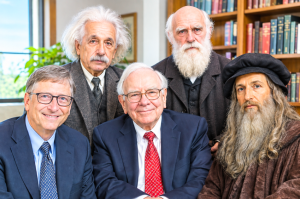
Warren Buffett, in his biography ‘The Snowball’ by Alice Schroeder says “In business, I look for economic castles protected by unbreachable moats.”
This statement is in the context of business, but what I learned after reading ‘The Snowball’ is that one of the powerful moats of a long healthy human life is social relationships in various forms.
Warren Buffett, himself, is 95 years old now and he officially stepped down as a CEO of Berkshire Hathaway only at the end of 2025.
Dr. Robert Waldinger, MD, professor of psychiatry at Harvard Medical School and the author of ‘The Good Life’ gives a clear answer to a question of the need of social relationships in ‘The GoodLife’.
The question is: What makes our life fulfilling and meaningful? The simple but surprising answer to all of us from the research study is: our relationships. The stronger our relationships, the more likely we become happy, fulfilled, and healthier. In fact, the Harvard study of adult development reveals that the strength of our connections with others in the family and in society can predict the health of both our bodies and our brains as we go through life.
The invaluable insights in ‘The good life’ emerge from the revealing personal stories of many participants in the Harvard study as they were followed year after year for their entire adult lives, and this knowledge was bolstered by research findings from many other studies across the globe. Relationships in all their forms like friendships, romantic partnerships, families, coworkers, walking partners, cooking club members, religious study groups, all conclude the same result ‘good relationships make us happy, healthy, and long lived’.
Dr. Waldinger’s TED Talk about the study, ‘What Makes a Good Life,’ has been viewed more than 44 million times and is one of the most-watched TED talks ever.
In my opinion, it’s worth watching periodically in our life as a reminder how to live a life happily.
“Robert Waldinger: good relationships make us happy, healthy, and long lived.”
We all know now that isolation is aversive and unsafe for any social species including human beings.
Research shows that it decreases our lifespan.
It promotes obesity and type II diabetes and reduces poststroke survival rates.
It increases stress response and decreases the benefits of exercise.
It increases levels of the stress hormone cortisol.
It increases oxidative stress because human loneliness is an activator for all of the negative consequences in life.
Loneliness motivates us to create, repair, and maintain our social relationships.
It modulates the dopamine reward system in our brains, and it creates neural pain, which we seek to remedy by socializing.
In the book ‘Loneliness’ authors John T. Cacioppo and William Patrick combine deep science of human need indicating loneliness as a biological alarm system for missing social bonds, much like appetite signals a need for food.
Our ventral striatum, a key component of the dopamine reward system, is activated when we receive social rewards through romantic relationships, cooperative relationships, social comparisons, and by being altruistic.
We have to understand that we humans are mentally wired and evolutionarily bound by our neurophysiology to communicate, connect, and coordinate with one another.
In one of the best books that I read many years ago, ‘Outliers’, the author Malcolm Gladwell, describes a group of people from Roseto, Italy, in his introduction chapter who emigrated to the USA but had a very low death rate from heart disease in their native place in Italy. It wasn’t from any diet or exercise or any secret. It was due to social bonding, connection, and togetherness.
They had three generational family meals at home. People used to walk up and down the street, sitting on their porches talking to each other all the time.
The medical community at the time wasn’t thinking about the benefits of community connectedness beyond the individual health status which was the reason why they were healthy with no heart diseases.
One thing we have to understand very clearly is that there is a difference between loneliness and solitude in our life.
Don’t mix them up. If you need 30 minutes of meditation to relax or 15 minutes sunbathing for vitamin D, that’s really good for your life. That’s your ‘me time’, that’s your solitude for your body reset.
Remember, loneliness is the pain of being alone everywhere but solitude is the glory of being alone sometimes.
So the key is loneliness is a failed solitude in its positive implementation.
“Loneliness is the pain of being alone everywhere but solitude is the glory of being alone sometimes.”
Psychologist and the author of ‘Joy of Solitude’ Dr. Robert Coplan, PhD, says “Solitude is not an accident or a default state; it requires intentional choices to step away from constant noise.”
Dr. Coplan adds “Loneliness is the feeling when the quality and quantity of our social life doesn’t meet our personal wants and expectations.”
The key is we must distinguish between loneliness and solitude in our daily lives.
Nobel laureate economist and author of ‘Administrative Behavior’, Herbert Simon, says “a wealth of information creates a poverty of attention.” It indicates that information consumes our attention and when our data is limitless, our focus becomes the scarce resource.
Nowadays, we are not socializing enough physically because we are spending time consuming too much information from social media on the screen.
In the current social media age, most of our focus has been captured by video content.
Video accounts for 80 percent of our internet traffic, and we retain 10 percent of the messages we read but we retain 95 percent of messages from video.
Remember, video, not text, is our primary medium of content consumption now.
Of course, today’s video content from TikTok, Facebook, and YouTube is taking up a lot of our quality physical socializing time.
Remember, physical socialization needs intentional focus to implement.
The US Navy SEALs are known for saying “slow is smooth, smooth is fast.” Former Navy SEAL and the author of ‘The Way of the SEAL’ Mark Divine captures military tactics with ancient warrior traditions to teach mental toughness, emotional resilience, and strategic focus in life. Divine indicates that we must be methodical and patient in planning and executing time critical missions.
In crisis, working at a slow and smooth pace reduces mistakes and, in the end, speeds up our mission.
This slow and smooth connection means how focused we are on things that promote our healthy and happy life in the long-run.
Many years ago, Bill Gates and Warren Buffette were in one gathering. Bill’s father asked them a question, “What is the secret of your success?”
Without consulting and looking at each other, they both wrote the same word ‘focus’ as their answer.
This is not a coincidence, this is more relevant now than their time due to more encroachment of social media in our lives at the moment.
We are spending too much time inside the house than outside consuming too much entertaining information, too much noise in the name of news and information.
When we choose to come out from home ignoring TikTok videos and facebook reels, it feels slow, not exciting at all, but eventually, it speeds up our lives by being healthy, free from Alzheimer’s, dementia, and heart disease.
In the book ‘Keep Sharp’ the author Dr. Sanjay Gupta, MD, explores the direct science of how human connection and social interaction stimulate the brain to protect against Alzheimer’s disease.
Mike Tyson said “Everyone has a plan until they get punched in the mouth”.
We all make plans until we are hit by heart disease and dementia in the end as a consequence of how we spent our entire life, probably in an isolated cubicle.
Plans are worthless, but planning is everything if implemented consciously and by our choice.
So please, plan time for social interaction regularly.
“Human connection and social interaction stimulate the brain to protect against Alzheimer’s disease.”
When we are out socializing in the sun we are not only exchanging our emotions and experiences with others, we are also getting enough vitamin D.
Vitamin D produced by the skin or from foods is activated in the liver to produce 25-hydroxyvitamin D which is the major circulating form of vitamin D in the bloodstream.
When vitamin D levels are low, there is increased release of PTH, a parathyroid hormone from the parathyroid gland that causes us to extract calcium from our bones that leads over time to bone thinning diseases like osteopenia and osteoporosis.
These are common diseases when we get older.
We can reduce this risk by regularly socializing on sunny days.
The level of vitamin D is required to suppress PTH to protect our bones is at least 50 ng/ml or greater. If we have low vitamin D, we need D3 supplement at least 2000 IU each day.
Research also indicates, epidemiologically, there is a sharp drop off in cancer incidence in people with above 50 ng/ml 25-OH vitamin D blood level.
Vitamin D is responsible for cell proliferation and differentiation. Uncontrollable proliferation can lead to cancer. Vitamin D promotes cell differentiation and prevents cell proliferation to prevent the risk of tumor formation.
Low blood level of vitamin D has high risk of colorectal cancer, breast cancer, melanoma, bladder and lung cancer.
“When vitamin D levels are low, there is increased release of PTH, a parathyroid hormone from the parathyroid gland that causes us to extract calcium from our bones that leads over time to bone thinning diseases like osteopenia and osteoporosis.”
I strongly recommend watching dermatologist Dr. Richard Weller’s TedTalk where he explores how sunlight exposure impacts health beyond just vitamin D production.
When you prefer to stay inside the house and watch all day with packets of snacks, you are not only avoiding socializing benefits but also eating many chemicals.
These chemicals are the main cause of cancer, Alzheimer’s, dementia, and neurodegenerative diseases.
There are food preservatives like potassium sorbate, sodium benzoate, nitrites, butylated hydroxy anisol (BHA), butylated hydroxyl toluene (BHT) in food packages.
There are emulsifying agents like carboxymethylcellulose, polysorbate 80, carrageenan.
There are synthetic sweeteners like aspartame, sucralose, and saccharine. This affects our microbiome.
Flour whitening agents like azodicarbonamide, titanium dioxide are also inside the food packages to affect our health.
Processed oils like corn oil, vegetable oil, hydrogenated oil, grapeseed oil, cottonseed oil, canola oil are also in the packets.
Research shows that magnesium supplements augment physical strength and outside activities.
Daily intake of magnesium glycinate, 200mg, improves walking and shortened the time required to transition from a seated position to standing in elderly people.
This supplement could be a catalyst for social relationships especially for elderly people.
Magnesium deficiency creates unstable and potentially fatal heart rhythms.
Pregnant women experience eclampsia or preeclampsia with high blood pressure and risk of seizure.
Lack of magnesium is also the cause of incapacitating migraine headaches.
Dr. Monte Lai, PhD, the author of ‘The Vitamin Cure’ says “Magnesium ions are required to support the involvement of 300 different enzymes in various physiological functions in our body especially ATP production, bone health, and cellular insulin sensitivity to maintain blood glucose.”
The best magnesium level is 6.0 mg/dl or higher in a red blood cell magnesium level, not a serum level. Serum magnesium indicates extracellular fluid magnesium and it is tightly regulated by the kidneys. Our body pulls magnesium from bones and tissues to keep serum normal even if we are deficient in magnesium.
RBC Magnesium level indicates intracellular storage and tissue levels, therefore, it is better at catching early magnesium deficiencies that a normal serum test completely misses.
Remember the phytates chemical found in wheat and grains bind magnesium in the gut and take into the toilet causing magnesium deficiency.
“Phytates chemical found in wheat and grains bind magnesium in the gut and take into the toilet causing magnesium deficiency.”
Omega-3 fatty acids influence personal relationships by improving our mood, lowering interpersonal aggression, and reducing stress and anxiety. Better emotional stability helps to maintain positive social and romantic bonds with other people.
Omega-3 fatty acids, mostly, eicosopentaenoic acid (EPA) and docosahexaenoic acid (DHA) are crucial for preventing cognitive impairment and Alzheimer’s and other forms of dementia. One best source is the brains of animals as meat.
Not only that, studies have shown that people aged 74 and older with higher blood levels of omega-3 fatty acids live longer with lower risk of cardiovascular disease, and have increased muscle mass, and muscle strength.
Remember, omega-3 fatty acids are essential nutrients and our body cannot produce them, we have to take them from food or supplements.
Other sources of omega-3s are seafood and shellfish but they have risks of contamination of heavy metals like mercury and cadmium. These metals are difficult to remove and cause health risks like dementia, kidney disease, and cancers.
William Davis, MD, author of ‘Super Body’ says “Omega 3s helps to prevent endotoxemia, entry of bacterial breakdown products into the blood stream. Endotoxemia is a main cause of insulin resistance and inflammation that accelerates abdominal visceral fat and impairs muscles.”
Dr. Davis adds “The best dose of omega-3 fatty acids to reshape our body contours is 3000 mg/day of the combination of EPA and DHA contained, not the intake of fish oil.
Around 5 capsules per day containing 360 mg EPA and 240 mg DHA is ideal.”
Generally, a standard daily intake of 250 to 500 mg of combined EPA and DHA supports our brain and mood health, managing our stress and communication levels.
Conclusion
Dr. Robert Waldinger, MD, author of ‘The Good Life’ says “good relationships make us happy, healthy, and long lived.”
Loneliness is the pain of being alone everywhere but solitude is the glory of being alone regularly for a certain time everyday as a requirement to reset our body and mind. Research shows that human connection and social interaction stimulate the brain to protect against Alzheimer’s disease.
When vitamin D levels are low in our body, there is increased release of PTH, a parathyroid hormone from the parathyroid gland that causes us to extract calcium from our bones that leads over time to bone thinning diseases like osteopenia and osteoporosis.
Phytates chemical found in wheat and grains bind magnesium in the gut and take into the toilet causing magnesium deficiency in our body.
Yam Timsina, PhD, writes primarily on health basics, scientific progress, social upliftment, and value creation.
Disclaimer: “Please note that some links in this post are affiliate links, which means I may receive a small commission if you make a purchase through them, at no extra cost to you.”